
Door weatherstripping replacement in Toronto is one of the cheapest ways to make a cold house feel warmer. If you can feel a breeze around your front door, see daylight at the corners, hear the wind whistle on a stormy night or find frost on the inside of the door in January, the seals around your door have probably failed. In most homes this is not a reason to buy a new door. It is a reason to replace the weatherstripping, the door sweep and sometimes the threshold.
This guide explains how door seals work, how to tell which part has failed, what you can do yourself, and when it makes sense to call Door Repair Toronto for a professional repair. If you need help now, call (866) 820-1331.

How a Door Keeps the Weather Out
An exterior door is sealed by three separate systems. When any one of them fails, you get drafts.
- Weatherstripping runs along the top and both sides of the frame. On modern steel and fiberglass doors it is usually a foam-filled or bulb-style compression strip pressed into a groove in the frame.
- The door sweep or bottom seal is attached to the bottom of the door itself. It closes the gap between the door and the threshold.
- The threshold or sill is the piece the door closes over at the bottom. Many have an adjustable cap that can be raised or lowered to meet the sweep.
All three wear out. Foam compresses and stops springing back, rubber cracks in the cold, sweeps tear from being dragged over grit and salt, and thresholds loosen or rot underneath.
Signs Your Door Weatherstripping Needs Replacing
You can feel air moving
On a windy day, hold the back of your hand or a lit incense stick near the edges of the closed door. If you feel air or see the smoke move, the seal is not doing its job.
You can see light
Turn off the hallway lights during the day and look at the door edges from inside. Light at the corners, along the latch side or under the door means there is a gap.
The strip is flat, cracked or missing
Open the door and look at the weatherstripping. If it is flattened, torn, brittle, painted over, or simply missing in places, it needs replacement.
Frost, ice or water inside
Frost on the inside of the door, ice along the bottom or water on the floor after a storm are clear signs of air and water leaks. Our guide to winter door problems in Toronto covers frost and condensation in more detail.
Higher heating bills and cold hallways
A leaky door can make the front hall noticeably colder than the rest of the house and keep the furnace running more often.
The paper test
Close the door on a sheet of paper at several points along the frame. If the paper slides out easily, the seal is not compressing enough at that spot. If it is tight everywhere, the problem may be at the bottom instead.

Why Toronto Doors Lose Their Seal
Our climate is tough on door seals. Freeze-thaw cycles harden rubber and vinyl. Road salt and grit tracked onto the threshold grind away the sweep. Summer heat on south- and west-facing doors bakes foam strips until they lose their spring. And as houses settle, doors move slightly out of square, opening gaps that the original seal was never designed to cover.
Sometimes the weatherstripping is fine, but the door itself has moved. Loose hinges let the door sag, which opens a gap at the top on the latch side and crushes the seal at the bottom. In that case, hinge repair has to come first. See our door hinge repair page.
Types of Door Weatherstripping
Compression (kerf) weatherstripping
Most modern pre-hung steel and fiberglass doors use a strip with a barbed flange that presses into a slot, or kerf, in the frame. These are quick to replace when you have the right profile. Matching the profile and size is important, because the wrong strip will either leak or stop the door from latching.
Magnetic weatherstripping
Many steel doors use a magnetic strip on the hinge and latch sides that grips the steel door like a refrigerator seal. When the magnet weakens or the vinyl tears, the strip must be replaced with the same type.
V-strip and adhesive foam
Older wood doors and frames without a kerf often use V-strip or adhesive foam tape. These are inexpensive but usually shorter-lived. On a main entry door, a proper kerf-style seal often performs much better, and in some cases the frame can be routed to accept one.
Door sweeps and bottom seals
Bottom seals come as screw-on sweeps, slide-in U-shaped bottoms that fit a groove in the door, or automatic drop seals on some commercial and specialty doors. The right type depends on the door construction and threshold.
Threshold Problems and Replacement
If drafts or water come in at the bottom even with a new sweep, the threshold may be the problem.
- Adjustable thresholds have screws that raise or lower the cap. A small adjustment can close a gap in minutes.
- Worn or cracked caps can often be replaced without removing the whole sill.
- Rotted or loose sills need replacement. Water that gets under a threshold can rot the subfloor, so it is worth dealing with quickly.
Threshold replacement is a more involved job, especially on older Toronto homes with wood sills, brick steps or non-standard door widths. It is usually best handled by a professional.

DIY vs Professional Weatherstripping Replacement
What you can do yourself
- Clean the existing weatherstripping and threshold to remove grit.
- Adjust an adjustable threshold cap a quarter turn at a time.
- Replace a simple screw-on sweep with an identical one.
- Add adhesive foam to an interior or secondary door.
When to call a professional
- You cannot identify or find the correct weatherstripping profile.
- The door does not latch properly after new seals are fitted.
- The door is sagging, rubbing or out of square.
- The threshold is rotted, loose or leaking water.
- The door has a magnetic seal or a specialty bottom seal.
- Drafts continue even after you replaced the obvious parts.
A technician will check the door alignment, hinges, latch and strike as well as the seals, so the repair actually lasts. If the door also has trouble closing or latching, our guide on why a door will not close properly is helpful.
What a Professional Door Seal Repair Includes
- Inspecting the door, frame, hinges, latch and threshold.
- Tightening or replacing hinge screws and correcting any sag.
- Removing old weatherstripping and cleaning the kerf.
- Fitting the correct replacement weatherstripping on the top and sides.
- Installing a new sweep or bottom seal sized to the door.
- Adjusting or replacing the threshold cap.
- Adjusting the strike so the door latches firmly against the new seal.
- Checking for light and air at every edge before leaving.
When Weatherstripping Is Not Enough
New seals fix most drafts, but not all of them. If the door slab is warped, delaminated or rotted, or the frame is badly out of square, the door may never seal properly again. In that case, a new door is the better long-term fix. Our guide to choosing a new front door in Toronto and door replacement service can help you decide.
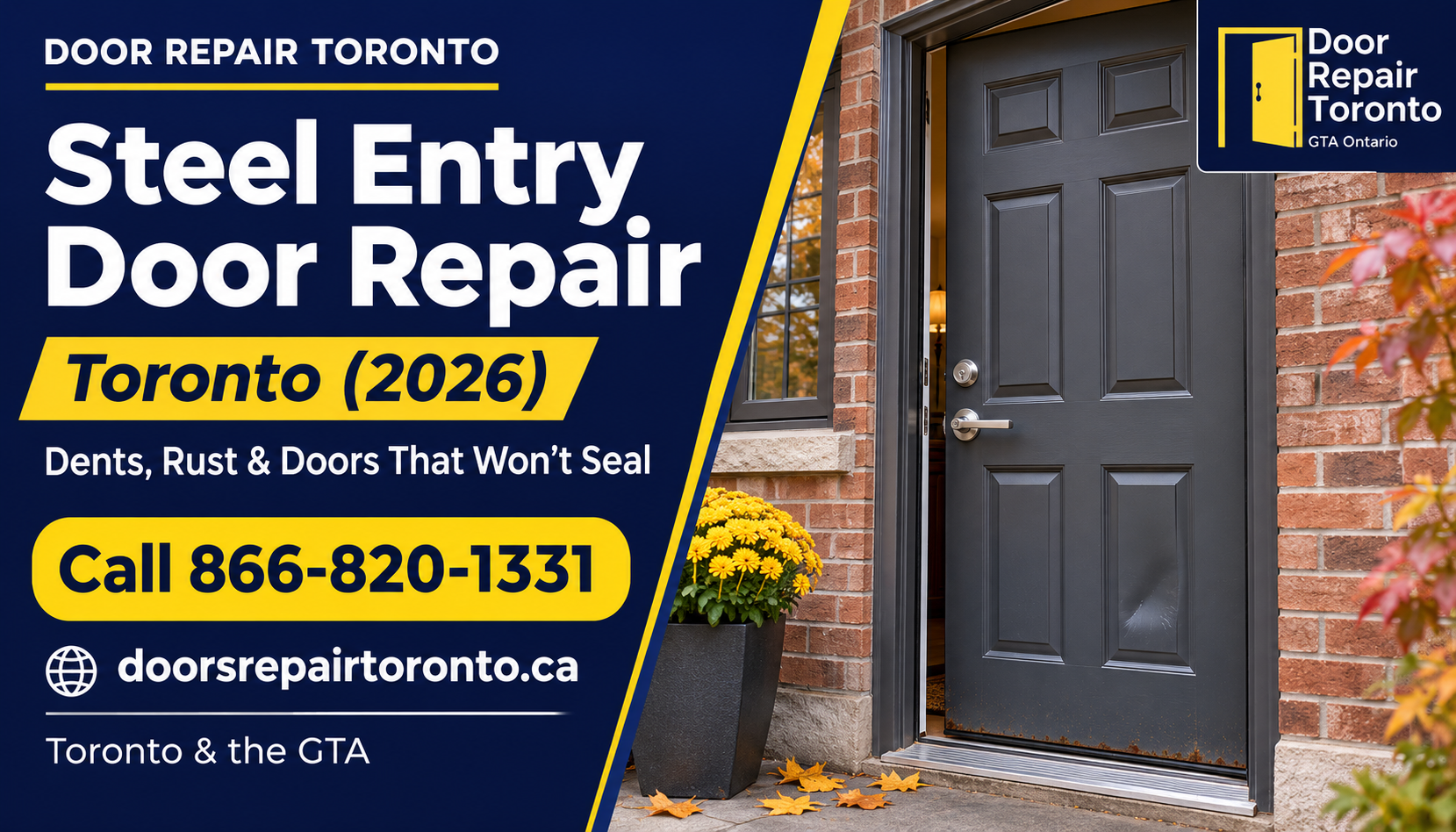
Steel doors with rust at the bottom or dented skins may also be candidates for repair rather than replacement. See steel entry door repair in Toronto.
Energy Efficiency and Comfort
Sealing air leaks around doors is one of the simplest energy improvements in any home. If you are thinking about replacing the door entirely, look at its energy rating as well. Natural Resources Canada explains how ENERGY STAR windows, doors and skylights are rated for Canadian climate zones, which is a useful reference when comparing products.
Do not forget other doors
Back doors, side doors, doors to the garage and patio doors leak just as much as front doors. Patio doors in particular have long sliding seals and pile weatherstripping that wear out. See our sliding door repair and patio door lock repair pages, and our storm door repair service if you have a storm door that no longer closes tight.
Security Benefits of a Well-Fitted Door
A door that seals properly is usually a door that closes and latches properly, too. Gaps that let in air can also give a pry bar a place to start. When we replace weatherstripping, we make sure the latch and deadbolt engage fully. For more on security, see our front door will not lock guide, lock change service, burglary door repairs and our article on ways to protect your door against burglary.
Commercial Door Seals
Businesses lose heat through doors too, especially busy storefronts and back doors that are opened all day. Worn seals on commercial doors also let in snow and rain. Our commercial door repair team replaces seals, sweeps and thresholds on storefronts, steel doors and aluminum doors. See also aluminum door repair, glass storefront doors, door closer repairs and automatic door repair.
Seasonal Door Seal Checklist for Toronto Homes
Early fall
- Inspect weatherstripping on every exterior door for flat, torn or missing sections.
- Do the paper test on the top, both sides and the bottom.
- Clean the threshold and check that the sweep touches it evenly.
- Tighten hinge screws and check that the door does not rub at the top corner.
Mid-winter
- Look for frost or ice on the inside face of the door, a sign of air leakage.
- Sweep salt and grit off the threshold so it does not chew up the bottom seal.
- Do not force a door that is frozen shut. Warm the seal gently instead of pulling hard.
Spring
- Check for water stains or soft wood under the threshold after the snow melts.
- Replace any seal that was damaged over the winter before summer storms arrive.

Areas We Serve
We replace door weatherstripping, sweeps and thresholds across Toronto and the GTA, including Scarborough, Vaughan, Markham, Mississauga, Brampton, Oakville, Ajax, Richmond Hill, Barrie, Waterdown and Stoney Creek.
Frequently Asked Questions
How often should door weatherstripping be replaced?
It depends on the material, the exposure and how often the door is used. Check it every fall. If it is flat, cracked or no longer touches the door all the way around, it is time to replace it.
Can I replace weatherstripping without replacing the door?
Yes. In most cases the door and frame are fine and only the seals need replacing. That is far cheaper than a new door.
Why is my door hard to close after new weatherstripping?
The new strip may be thicker than the old one, or the strike may need adjusting. A small strike adjustment usually fixes it. If it does not, the profile may be wrong for the door.
What causes a draft under the door?
A worn sweep, a threshold that is set too low, or a door that has sagged. Adjusting the threshold and replacing the sweep usually solves it.
Is a drafty door a sign I need a new door?
Not usually. Most drafts are caused by worn seals or loose hinges. Replacement is only needed if the slab or frame is damaged or badly out of square.
Do you repair interior doors too?
Yes. See our interior door repairs and interior wood doors pages.
Book Door Weatherstripping Replacement in Toronto
Stop paying to heat the street. Our technicians replace weatherstripping, sweeps and thresholds, fix sagging hinges and adjust latches so your door closes tight. Call (866) 820-1331 or use our contact page. You can also browse our residential door repair, entry door repair, front entry doors, door frame repair, emergency door repair and doors repair Toronto pages.
Door Repair Toronto: (866) 820-1331