
Aluminum doors are everywhere in Toronto: storefronts on Queen and Yonge, plaza units in Scarborough, office lobbies, clinics and condo entrances. They are strong, light and do not rot, but they carry heavy glass and take hundreds of cycles a day, so their hardware wears out. The good news is that most aluminum door problems are hardware problems, and the door itself can usually be saved. This guide explains what fails, how it is repaired and when replacement makes sense. For service, call 866-820-1331.
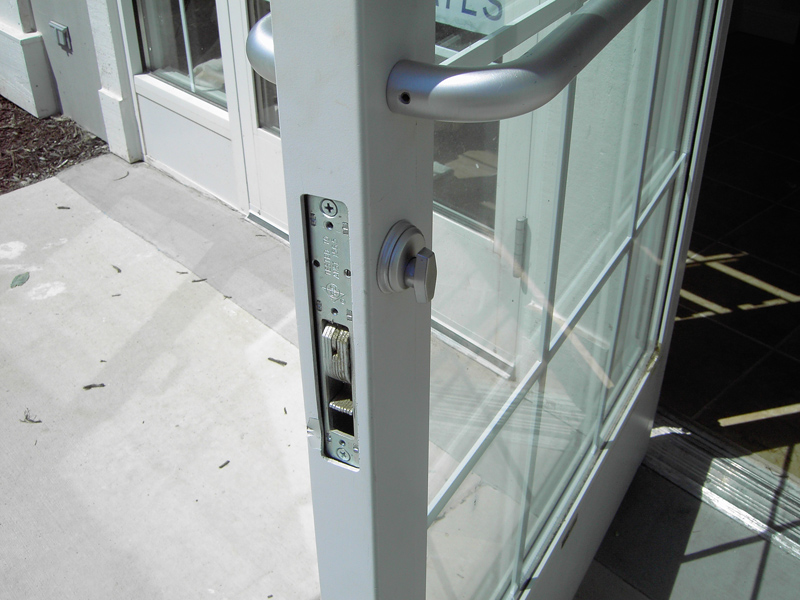
How an aluminum door is put together
Knowing the parts makes it easier to describe the problem and understand the repair.
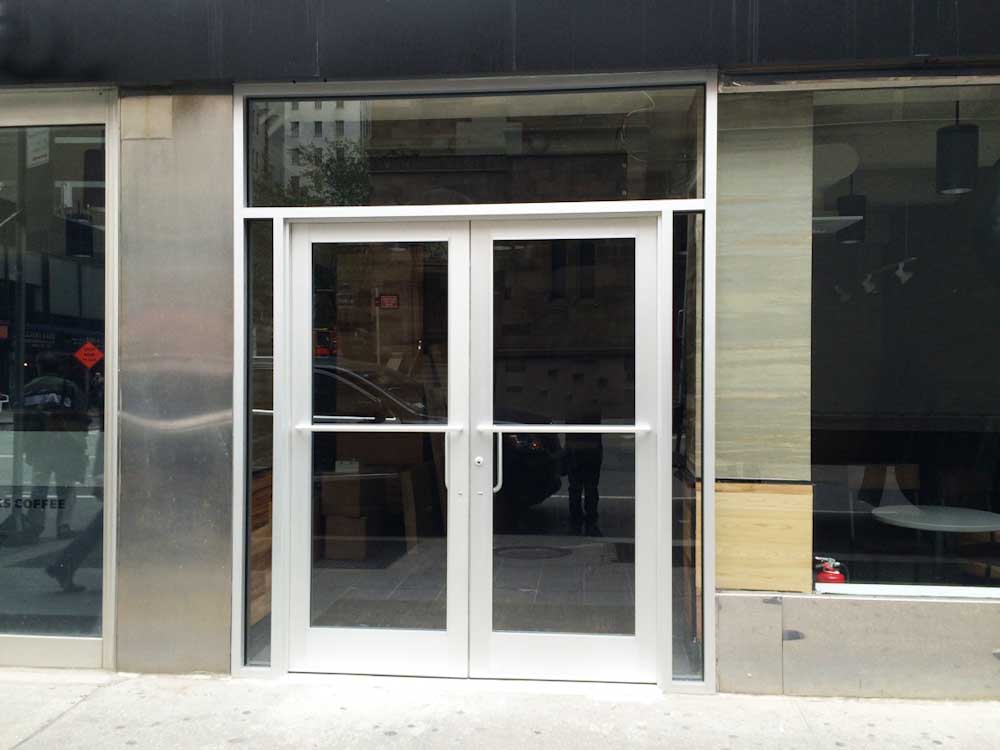
- Stiles and rails: the aluminum frame of the door leaf, joined at the corners.
- Glazing: tempered or laminated safety glass held by glazing stops or beads.
- Pivots or hinges: top and bottom pivots, offset pivots, butt hinges or a continuous hinge.
- Closer: overhead surface closer, concealed overhead closer or floor closer.
- Lock and exit hardware: deadlock with cylinder, push and pull bars, or panic hardware.
- Threshold and seals: weatherstrip, sweeps and the threshold under the door.
The most common aluminum door problems
Door drags on the floor or the threshold
When a door starts scraping, the bottom pivot or hinges have worn and the door has dropped. On storefronts with a floor closer, the spindle or the closer itself may be failing. Replacing the worn pivot or adjusting the hinge restores the clearance.
Door slams or will not close
A closer that slams has lost control of the closing or latching speed. If it leaks oil, the hydraulic seals have failed and it must be replaced. A door that will not close fully may also be dragging or out of alignment. See door closer repair in Toronto.
Lock will not throw
Aluminum storefront deadlocks have a long hook or bolt that must line up with the strike in the frame. When the door sags even a little, the bolt hits the strike instead of entering it. Correcting the door alignment usually fixes the lock; worn cylinders are replaced.
Corners separating
The corner joints of the door hold it square. After impacts or years of slamming, corners can loosen and open up, and the glass starts to move. Many corners can be re-secured; severe damage means a new door leaf.
Broken or cracked glass
Door glass must be safety glass. A cracked panel is a safety and security problem and should be boarded or secured until the correct glass is installed. See commercial glass doors in Toronto.
Drafts and water at the threshold
Worn sweeps and weatherstripping let cold air and water in, especially on doors facing the street. New seals and a properly adjusted door seal the opening again.
Pivots and hinges on aluminum doors
Offset pivots
Offset pivots sit at the top and bottom of the door on the hinge side, slightly away from the frame. The bottom pivot carries almost the full weight of the door and glass, so it is usually the first part to wear. A worn bottom pivot makes the door drop on the lock side, drag at the threshold and miss its lock.
Center-hung pivots and floor closers
Many storefronts use center-hung pivots with a floor closer set into the concrete. The closer controls the door and carries its weight. When it fails, the door may swing freely, sag or slam. Replacing a floor closer involves the closer body, the spindle and sometimes the cement case.
Butt hinges and continuous hinges
Some aluminum doors hang on butt hinges, which loosen in the aluminum frame over time. A continuous (full-length) hinge spreads the load along the whole edge and is a popular upgrade for busy doors that keep sagging.
Closers for aluminum doors
Aluminum doors use three main types of closers. Surface-mounted overhead closers are visible on the frame and easy to service. Concealed overhead closers are hidden in the top rail and frame header, giving a cleaner look. Floor closers sit under the door in the floor. Each has adjustments for closing speed, latching speed and sometimes back-check, which slows the door if it is thrown open. Correct adjustment protects the glass, the frame and the people using the door.
Exit hardware and panic bars
Aluminum doors in stores, offices and assembly spaces often need exit hardware so people can leave quickly. Rim, concealed and vertical rod panic devices are common. If a panic bar sticks, does not latch, or the door rattles when locked, the device and strikes need adjustment or replacement.
What to tell the technician
- Is it a storefront door, an office or lobby door, or a home door?
- Is it single or double?
- Does it drag, slam, sag or fail to lock?
- Is the closer above the door or in the floor?
- Has the door been hit recently?
Photos of the top and bottom of the hinge side and the lock edge help us bring the right parts the first time.
Repair or replace an aluminum door?
Repair when
- The frame and door leaf are straight and solid
- The problem is pivots, hinges, closer, lock or seals
- Corners can be re-secured
Replace when
- Stiles or rails are bent from impact
- Corners keep separating after repair
- The frame is corroded or damaged
- Parts for an old system are no longer available

Residential aluminum doors
Many Toronto homes have aluminum storm doors, sliding patio doors with aluminum frames and older aluminum-framed entry doors. The same principles apply: rollers, hinges, closers and seals wear before the frame does. See sliding door glass repair and door glass and storefronts.
Keeping an aluminum door working
- Keep the threshold and floor closer area free of salt and grit in winter
- Check that the door closes and latches without slamming
- Look for gaps at the corners of the door
- Tighten loose handles and push bars
- Call as soon as the door starts to drag, before the pivot fails completely
Aluminum and commercial door repair across the GTA
We repair aluminum doors across Toronto and the GTA. Related services: commercial door repair, Toronto commercial door repairs, Scarborough commercial doors, Mississauga commercial doors, Markham commercial doors, door hinge repair, fire door installation, lock change in Toronto and why a door will not close properly.
Frequently Asked Questions
Why is my aluminum storefront door dragging?
Usually a worn bottom pivot or hinge has let the door drop. Replacing the pivot restores clearance.
Can a slamming aluminum door be fixed?
Yes. The closer is adjusted, or replaced if it leaks oil.
Why will my storefront lock not lock?
The door has dropped and the bolt no longer lines up with the strike. Realigning the door usually fixes it.
Can separated corners be repaired?
Often yes. Severe damage may require a new door leaf.
Do you repair residential aluminum doors too?
Yes, including storm doors and aluminum patio doors.
How do I book aluminum door repair in Toronto?
Call 866-820-1331 to book a technician.